Letter Sounds Flash Cards
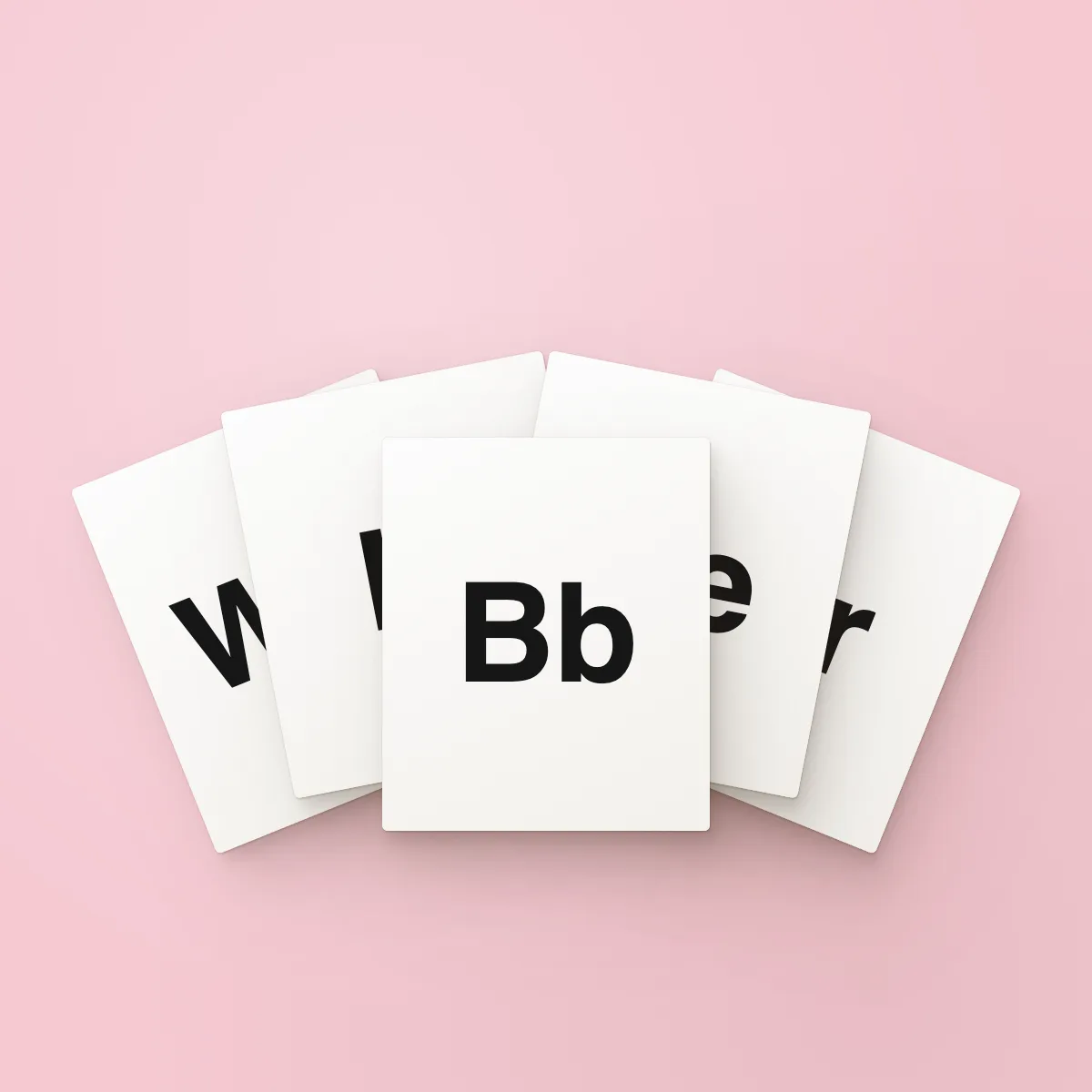
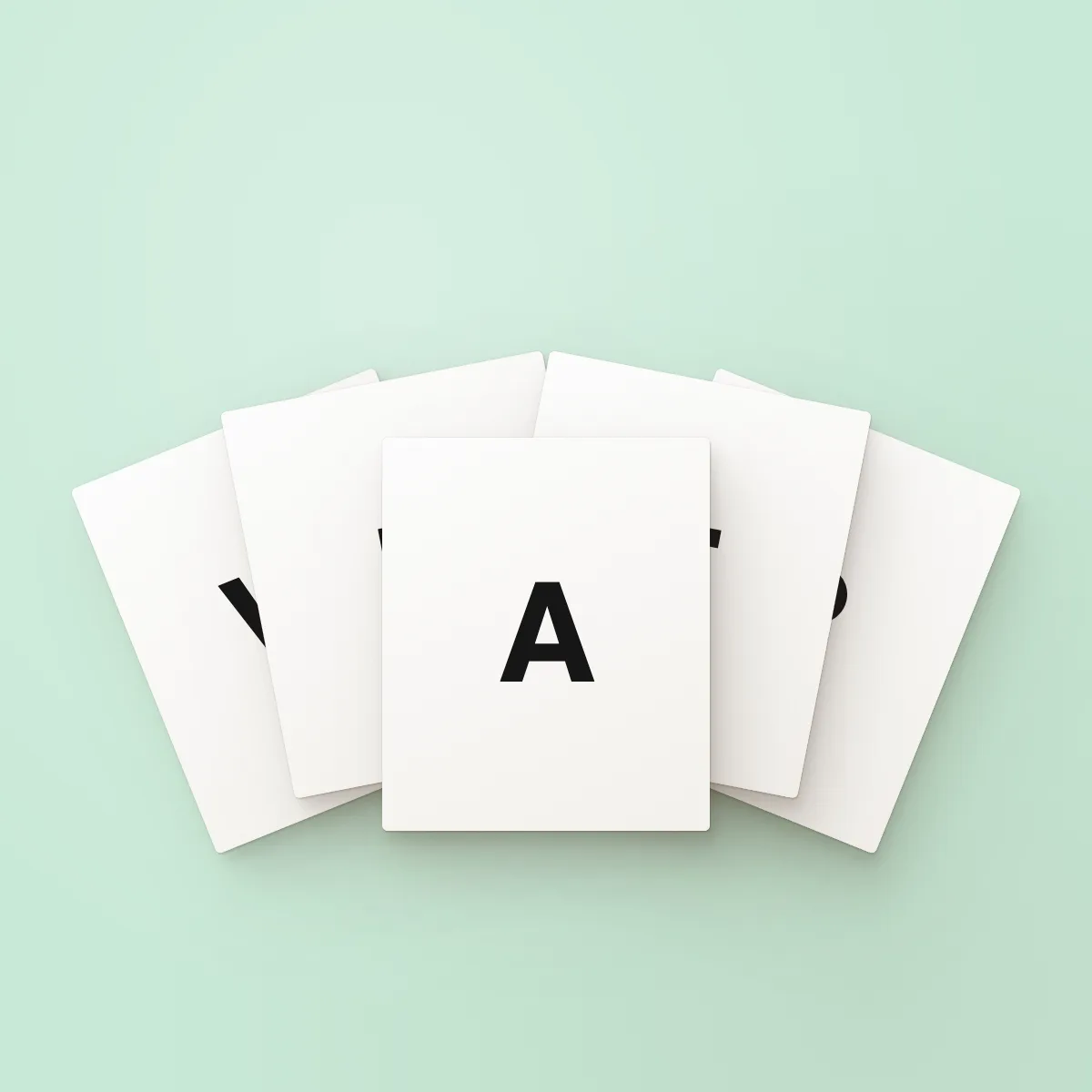
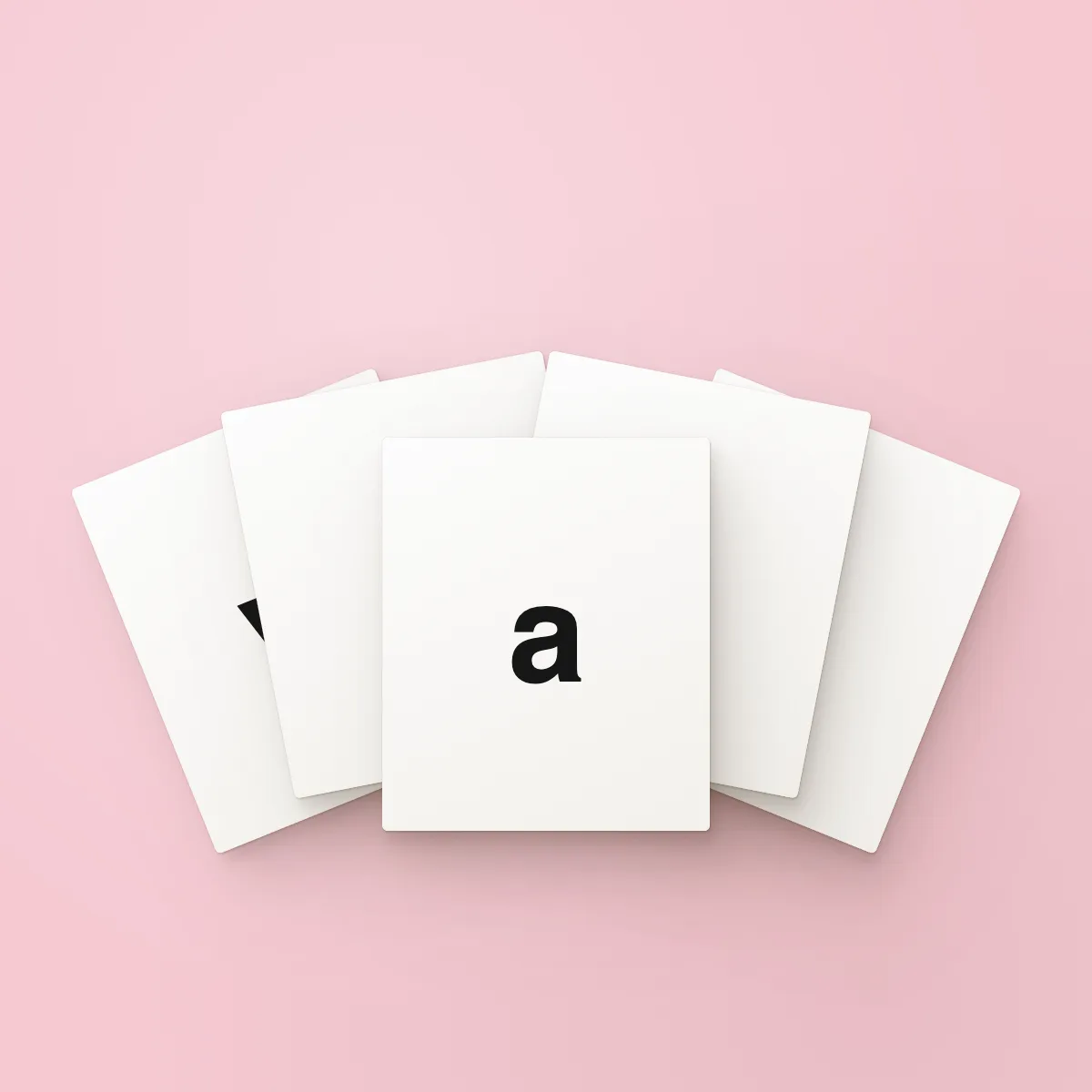
Free printable letter sounds flash cards: each card has the letter on the front, upper and lower case, and a key word that starts with its sound on the back, from apple to zip. The key word gives the adult the word to say, so the sound is always the same one your child hears at school. Flip through them on screen below, or download the PDF for US Letter or A4.
All 26 cards in this set
- Aaapple
- Bbball
- Cccat
- Dddog
- Eeegg
- Fffish
- Gggoat
- Hhhat
- Iiigloo
- Jjjam
- Kkkite
- Lllion
- Mmmoon
- Nnnest
- Oooctopus
- Pppig
- Qqqueen
- Rrrabbit
- Sssun
- Tttop
- Uuumbrella
- Vvvan
- Wwweb
- Xxfox
- Yyyo-yo
- Zzzip
How to print these flashcards
- Download the PDF in US Letter or A4.
- Print double-sided and choose "flip on long edge". Each answer lands on the back of its own card.
- Use cardstock (65 to 110 lb) if you have it. It lasts longer and the answers don't show through. Plain paper works too.
- Cut once down the middle, then across along the dashed lines. The cards run to the edges of the page, so there is nothing to trim at the sides, and the top and bottom cuts take off the small header and footer.
- For cards that last all year, laminate them and keep each set on a binder ring.
How to practice letter sounds with flashcards
Show the letter and ask "what sound does it make?" Not the letter name: /b/, not "bee". If your child is stuck, flip the card and say the key word slowly, stretching the first sound: "b-b-ball".
Teach a handful of sounds at a time. Many schools start with s, a, t, p, i and n, because those six already make lots of short words (sat, pin, tap). Add more once those come quickly.
Play "I spy" with the cards: hold one up and look for something in the room that starts with that sound.
Tips for letter sounds
- Say the pure sound, not "buh" or "muh". Clip it short: /b/, /m/. An extra "uh" makes blending words harder later.
- Start with s, a, t, p, i and n. Those six make lots of real words (sat, pin, tap, nap), so your child can read something straight away.
- Vowels on these cards are short sounds: a as in apple, e as in egg. Long vowels come later in phonics.
Who this set is for
Kindergarten. Knowing the main sound of every letter is a kindergarten goal in the Common Core, and it is the step that turns letter names into reading. Many children start in pre-K.
Common Core standard CCSS.ELA-LITERACY.RF.K.3.A: Demonstrate basic knowledge of one-to-one letter-sound correspondences.
Frequently asked questions
How do I print the letter sounds cards double-sided?
Download the PDF, choose double-sided printing and pick "flip on long edge". The key words are lined up so each one prints on the back of its own letter. Then cut along the dashed lines.
Why is x for fox and not x-ray?
Very few words start with the /ks/ sound that x usually makes. "X-ray" and "xylophone" start with other sounds, so fox, where the x sound is at the end, teaches the sound children will actually read.
What age should a child know the alphabet?
Many children know most letters by 4 and all of them by the end of kindergarten (age 5 to 6), which is the Common Core goal. Every child gets there at a different pace.
Why do the a and g look different from a book?
The cards use the single-storey a and g, the shapes children are taught to write. Books often use the two-storey versions, so point out both once your child knows the letter.
Can I print these on A4 paper?
Yes. Use the A4 download. The cards are laid out to fit A4, so nothing gets cut off at the edges.